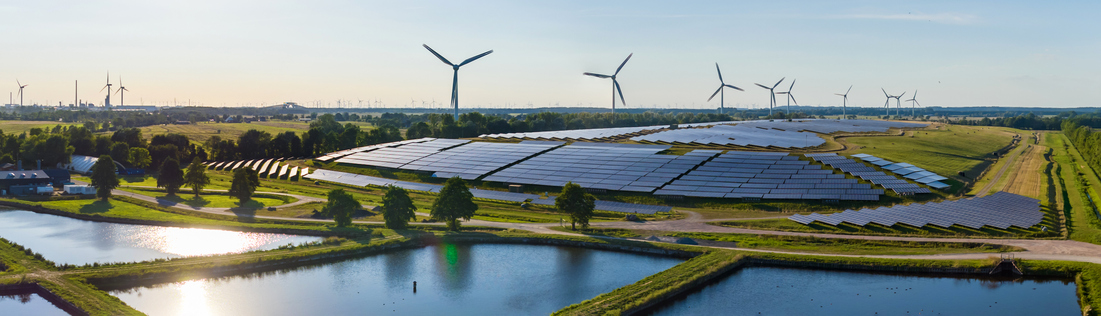
Let’s say that we, as a global society, finally decide that climate change is serious enough that we need to switch completely to sustainable energy sources, such as solar and wind power. In that case, new products, services, and supply chains will need to be developed to support the sale and distribution of the energy thus produced.
But in addition, new tactics will be needed to deal with the novel types of waste that these new supply chains create. For example, the fiberglass blades at the top of wind turbines, which function to generate power, eventually wear out and need to be replaced. These old blades are huge, approximately 50 yards in length, and heavy. And thus far, recycling them has proved difficult, because the epoxy that binds them together is purposefully designed not to separate. Thus, in recent years, massive hunks of fiberglass have been buried in landfills or incinerated—two outcomes with well-known and detrimental impacts in terms of pollution of the land and air. Some estimates predict that by 2050, the world will need to deal with 43 million tons of old turbine blades.
Some new options are emerging though, with varying levels of promise. One solution essentially chops up the old blades, so finely that they become fibers. As promoted by a subsidiary of a concrete firm, this process separates the resulting fibers and adds them into the concrete production process. As a reinforcing material, these fibers should make the concrete itself stronger, according to the company. In addition, it highlights that this recycling process is fully mechanical, such that it does not involve relying on potentially dangerous chemicals to break down the blades or burning them.
But breaking down the blades represents another option for dealing with them. A Danish company claims that it has invented a new liquid chemical process (the details of which are a closely held trade secret) that can separate the epoxy from the fiberglass fibers. The epoxy then gets cleaned, essentially, and transformed into “virgin-grade” epoxy that can be reused in various applications—including, in a notable demonstration, to make gummy candies that the company executives then ate. An appealing aspect of applying liquid chemicals to break down the blades is the possibility of doing so onsite, where the blades are. Because they are so heavy and difficult to transport long distances, moving them to facilities that have the capacity to crush them is inefficient and too costly. However, the companies promoting this approach argue that if they can pull enough reusable material from the blades, they can make the cost equation work.
As climate change continues to make the need for renewable energy sources more and more pressing, more blades and other forms of production waste must be addressed, so perhaps the scale economies eventually will work. Overall though, continuing to rationalize and enhance this reverse logistics chain represents both a requirement and a potential benefit for the companies that manage to innovate it best.
Discussion Questions
- When innovating new products, should companies be held responsible for end-of-life and recycling considerations?
- What other supply chains face challenges similar to those in the wind turbine industry, in terms of their reverse logistics, and how have they dealt with them?
Sources: Laura Paddinson, “Wind Energy Has a Massive Waste Problem. New Technologies May be a Step Closer to Solving It,” CNN, May 28, 2023;Elliot Englemaier, “Company Devises Ingenious Method of Repurposing Old Wind Turbines,” The Cool Down, August 29, 2023; RegenFiber, https://www.regenfiber.com
 Grewal Levy Marketing News