
When Ford Motor Company first announced that it would be introducing an electric version of its F-150 truck, it seemed like a turning point in the automotive market. If Ford believed that truck buyers would embrace an electric version of the best-selling vehicle in the entire U.S. market, then maybe consumers really were ready for the switch from gas-powered to electric vehicles (EVs). Even before the Lightning model trucks hit dealerships, Ford registered lists of more than 200,000 interested buyers. Other carmakers announced their own electric truck plans. The predictions of an unavoidable EV revolution were ubiquitous. But just about a year later, the new product adoption curve has hit a roadblock. In particular, early adopters of the electric F-150 Lightning have raised ongoing concerns about its capabilities, in terms of both range and power.
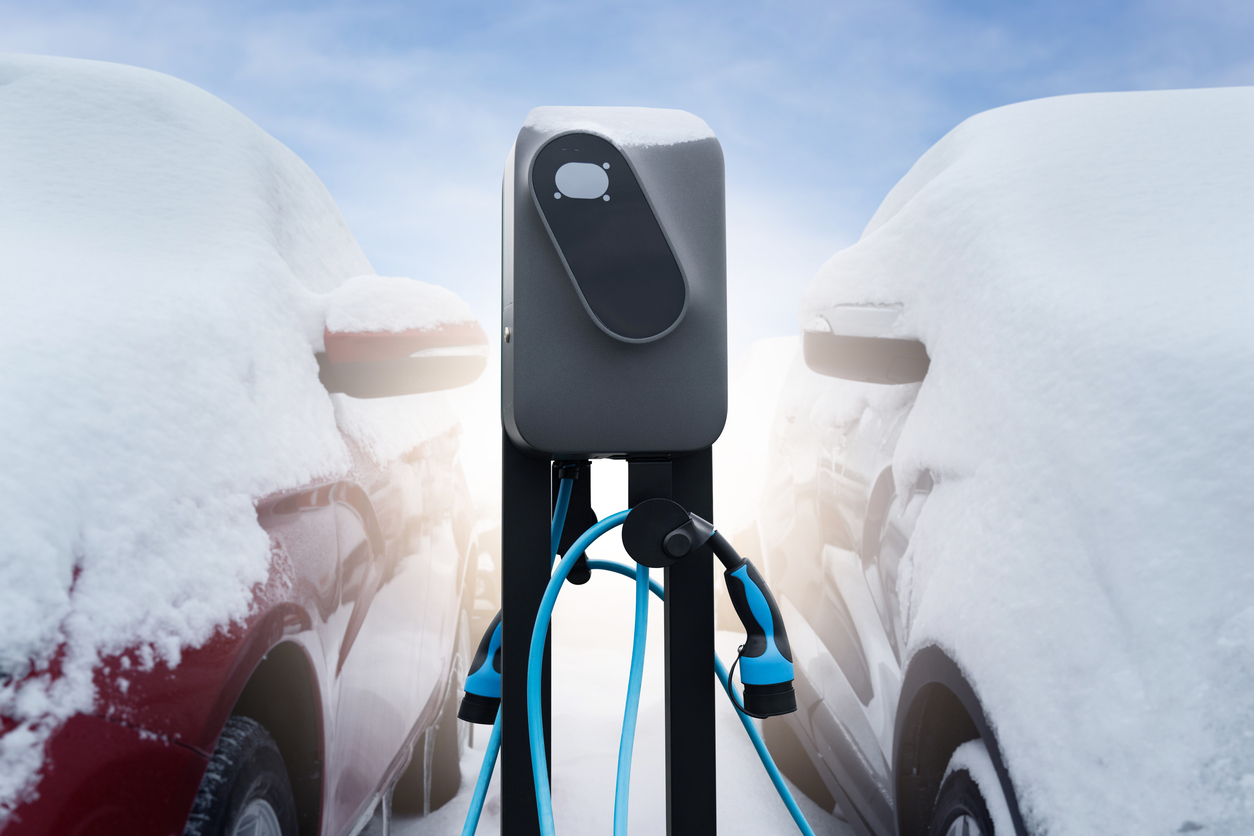
In particular, when these owners started up their trucks on the first cold morning after their purchase, they had an unhappy surprise: Their trucks’ average 300-mile ranges were dropping as precipitously as the temperatures. In some cases, the range decreased by as much as half. Drivers worried about their ability to complete their daily commutes and get their kids to and from school, a fear that grows especially intense in a scenario in which they had to consider the prospect of being stuck in frigid temperatures. Furthermore, if consumers lacked an in-home charging station, they could not warm up their trucks in the morning before leaving home—an uncomfortable and even dangerous limitation in really cold climates.
The range limitations also intensified the moment drivers hitched a load to tow. With greater weight, the trucks could not go as far. This issue hindered the efforts of truck drivers in any temperatures, such that a construction company owner in Florida found that, unless he stopped midday to recharge, he could not get to every job on his schedule in a day if he needed to bring along any heavy equipment.
In response to such concerns and constraints, the group of late majority consumers are expressing far more reservations before buying. Despite the huge waiting list for Lightning models, Ford sold only about 24,000 of the electric trucks. It also has reduced its planned production. Even though the Lightning is still available, far fewer of them are hitting dealership lots. Instead, Ford has indicated its plans to shift focus toward expanding its offerings of smaller, lightweight, non-towing vehicles.
Still, with the Lightning, Ford comes second only to Tesla in terms of the number of EVs sold in the United States. More battery-powered cars are being sold than ever before, and technological advances continue to promised that, at some point, range and power concerns can be overcome. But in the meantime, consumers remain cautious. As one industry analyst explained, when describing the state of the EV product market: “You had a wave of early adopters, but the mainstream consumer is just not jumping up and down for E.V.s. The manufacturers are putting out product, but the consumer is like, ‘We’re not participating.’”
Discussion Questions
- How would you graph the adoption curve for EVs overall? What about for electric trucks in particular?
- Should carmakers continue to develop heavier electric vehicles like trucks and SUVs? If so, how should they go about introducing them, to deal with and overcome consumers’ hesitation?
Sources: Neal E. Boudette, “How Ford’s F-150 Lightning, Once in Hot Demand, Lost Its Luster,” The New York Times, February 7, 2024; Neal E. Boudette, “Ford Will Cut Planned Electric F-150 Production as Demand Slows,” The New York Times, December 12, 2023
 Grewal Levy Marketing News