
Tags
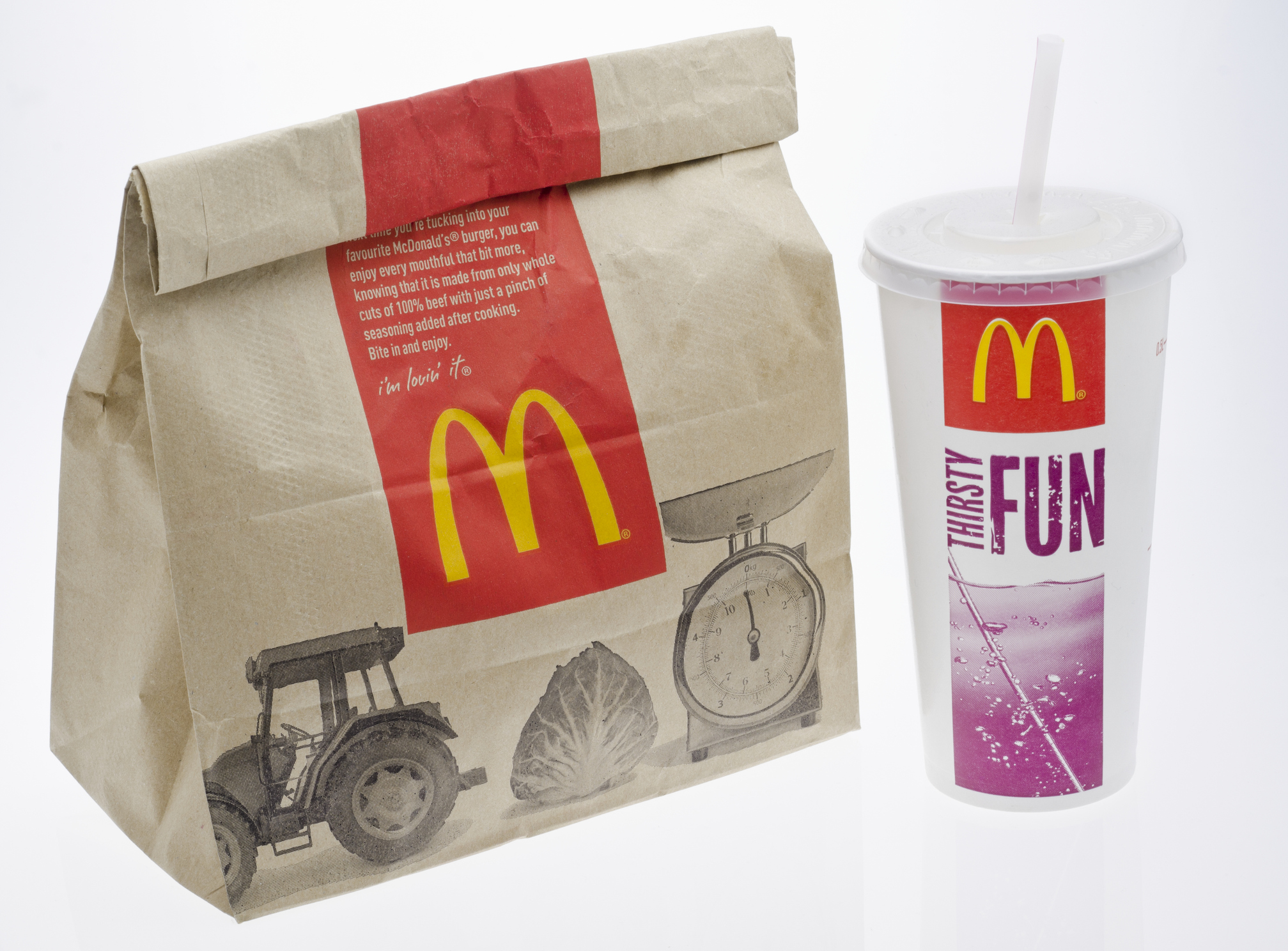
The documentary Super Size Me, released 20 years ago, highlighted the health implications of fast food. The late Morgan Spurlock (1970–2024) underwent an extensive experiment, eating nothing but McDonald’s for an entire month. In grossing more than $22 million, the documentary film represented an unlikely hit and earned it a cult status that endures today.
Although Super Size Me was a critique of America’s eating habits overall, it positioned McDonald’s as reflective of this consumer culture. Using McDonald’s as a metaphor, it sought to link the rise of capitalism with the loss of consumer well-being. In parallel, derisive terms like “McJob” to describe unrewarding work tasks and “McMansion” to describe trendy, impersonal, oversized homes became part of the cultural lexicon. That is, a larger societal critique arose in conjunction with the movie, and that critique cited McDonald’s as representative of everything it was criticizing.
Even as it denied that the film had any influence on its decisions, six weeks after Super Size Me was released, McDonald’s discontinued its Super Size menu and added more salads to its offerings. It also adapted its marketing strategies, such that it actively worked to leverage more celebrity endorsements, including its creative and highly popular Travis Scott menu (see the previous abstract, “Hip Hop Fast Food: A Novel Collaboration Between Travis Scott and McDonald’s”), to connect more strongly with young adults.
Whether we can attribute the strategic marketing shift to the movie or not, we can say that it has worked. Following some initial backlash and diminished sales, McDonald’s roared back and has continued to grow to include nearly 42,000 global locations. With this growth came other benefits, such that McDonald’s stock has increased nearly 1,000 percent since 2004.
Just as the critiques pertained to more than a single restaurant chain, these growth trends are evident throughout the fast food industry too. More than 115 million U.S. consumers eat fast food every single day, despite increased insights and information available about the severe health risks such consumption behaviors can create. Fast food still enjoys enduring popularity, likely due to its affordability and convenience—as well as its undeniable ability to satisfy human cravings for fat and salt.
In addition to documentarians, policy makers have sought to address unhealthy consumption patterns. In various states, regulations demand mandatory displays of calorie counts in restaurants. Advertising restrictions have been proposed too, in light of complaints that fast food companies are actively and explicitly marketing to vulnerable demographics, such as low-income households and children. Yet the fast food sector remains seemingly undeterred. As Spurlock admitted, “People say to me, ‘So has the food gotten healthier?’ And I say, ‘Well, the marketing sure has’.”
Discussion Questions
- In your view, did McDonald’s change its product offerings and promotional efforts due to the effect of Super Size Me?
- Do you have a preference for certain fast food brands? Do you think their marketing tactics inform that preference?
Sources: Brian Gallagher, “Fast Food Forever: How McHaters Lost the Culture War,” The New York Times, May 12, 2024; Charles Passy, “How Morgan Spurlock and ‘Super Size Me’ Changed Our View of McDonald’s,” MarketWatch, May 24, 2024; OpenAI ChatGPT, “Assistance with Research on the Impact of ‘Super Size Me’ on the Fast Food Industry,” ChatGPT, June 2, 2024; Trendlor, “Did ‘Super Size Me’ Hurt McDonald’s Revenue? | Exploring the Impact,” (This Link did not open for me, to be verified) Trendlor, June 26, 2023.
 Grewal Levy Marketing News