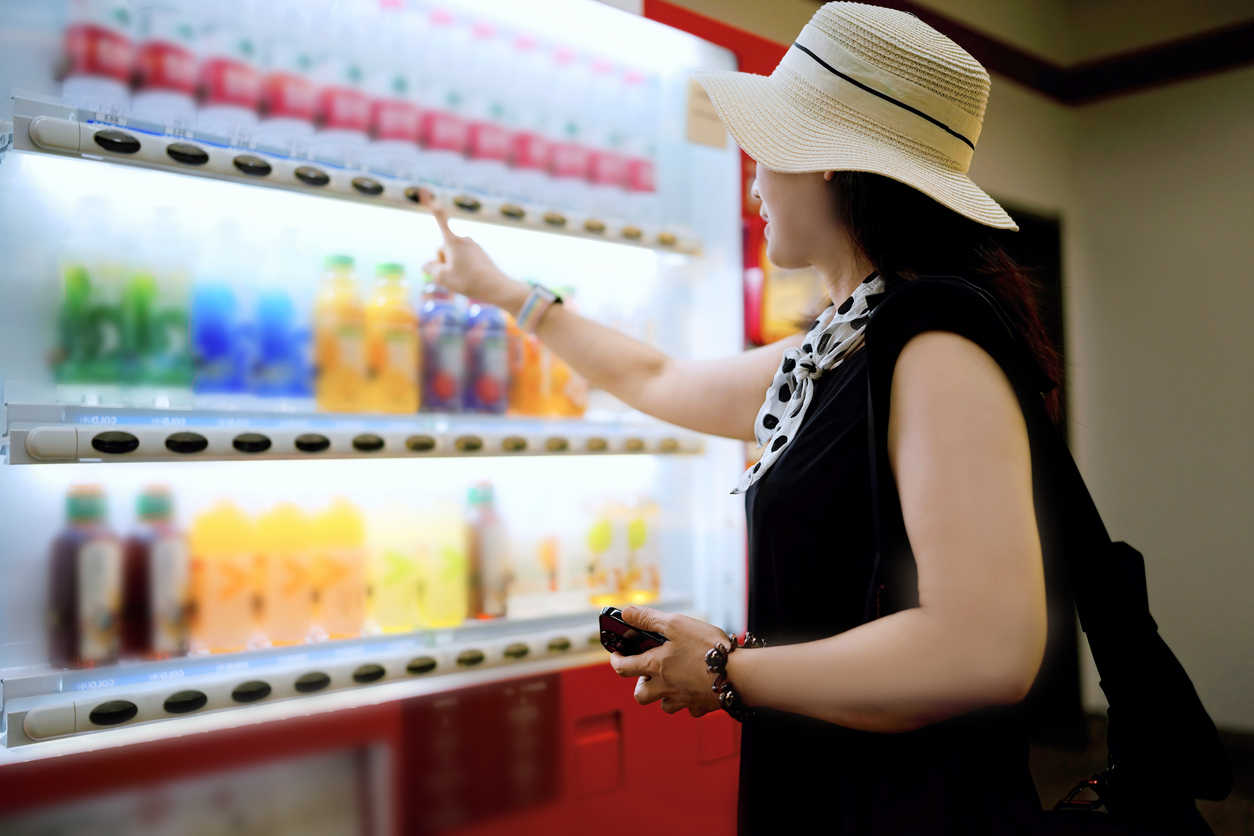
For consumers who enjoy the refreshing experience of drinking carbonated beverages but seek to avoid the sugar or artificial sweeteners contained in traditional colas, the beverage company Poppi positions itself as a compelling alternative. Its prebiotic sodas feature apple cider vinegar, among other ingredients, and the brand promotes its products as beneficial for consumers’ gut health, claiming that its products represent a healthy option. In its effort to promote the drinks to a broader swath of consumers, Poppi embraced the incomparable exposure provided by advertising during the Super Bowl. Seeking to garner the most attention possible, a tie-in to its 2025 Super Bowl advertisement involved sending full-size, hot pink vending machines, filled with Poppi sodas, to the homes of a few popular—and notably wealthy—influencers.
The stunt drew a lot of attention, but not quite in the way Poppi likely intended. People quickly took to social media, voicing criticisms of the very practice of lavishing such expensive gifts on a small number of ultra-rich influencer partners. In addition to the complaints from regular consumers, a competing beverage brand called Olipop joined the fray, alleging that Poppi had sent 32 machines in total, each at a cost of $25,000. Olipop further insinuated that Poppi had spent $16 million on its viral Super Bowl spot.
The backlash against such largesse featured many ethical arguments. Critics noted how much such machines might have been appreciated by essential workers, like nurses, teachers, and firefighters. They also highlighted the relatively high price points for Poppi sodas, such that even if the product lives up to its health claims, those benefits are out of reach to everyday consumers and workers who find it unrealistic to pay more than $2 per can. More broadly, criticisms focused on the lack of diversity associated with the campaign, as well as the detrimental environmental impacts and substantial carbon emissions created by transporting and distributing the massive machines.
Media experts affirmed such insights: Various marketing experts weighed in to offer Poppi some post hoc advice and suggest that the campaign would have been more successful if the machines had been sent to regular consumers or else installed at popular meeting spots, so that the free drinks would be available to lots of people. This sentiment was quickly picked up by social media, where creators emphasized the popularity of Poppi on college campuses.
Poppi says it was all a misunderstanding: Its intent all along was to move the machines to publicly accessible locations. The company pointed to events in New Orleans, ahead of the Super Bowl, including several hosted at popular locations near Tulane University. Poppi also rejected allegations about the extreme costs of the campaign, claiming instead that each machine cost less than half of the claimed $25,000. Furthermore, it clarified that it intended the vending machines to be loans, not gifts, such that the influencers knew they had to return them at the conclusion of the marketing campaign.
Even accounting for these claims, many consumers still regard the overall concept and execution as wildly out-of-touch. These criticisms align with a seemingly broader, growing dissatisfaction with opulent displays of wealth among social media users, especially in cases in which free products are gifted to those that can easily afford them, rather than users who might really benefit from a few freebies and a little extra help covering their grocery bills.
Perhaps the complaints would have less resonance if Poppi had never experienced a social media firestorm before. But instead, Poppi previously faced allegations of consumer fraud, following a class-action lawsuit that alleged that its drinks are not nearly as beneficial for gut health as the beverage company claims. Thus, the continued controversies appear to be adding even more fuel to the fire. Does anyone know if apple cider vinegar is good for dousing social media criticisms?
Discussion Questions
- Have you tried Poppi? Are you interested in doing so?
- What motivated the competing brand, Olipop, to join the criticism? Was it wise to do so?
Sources: Brittany Miller, “Soda Alternative Poppi Defends Gifting Vending Machines After Backlash,” The Independent, February 11, 2025; Olivia Craighead, “Breaking Down the Poppi Vending-Machine Drama,” The Cut, February 11, 2025; Robert Klara, “Poppi Says Backlash Over Sending Vending Machines to Influencers Is a Big Misunderstanding,” Adweek, February 10, 2025
 Grewal Levy Marketing News