
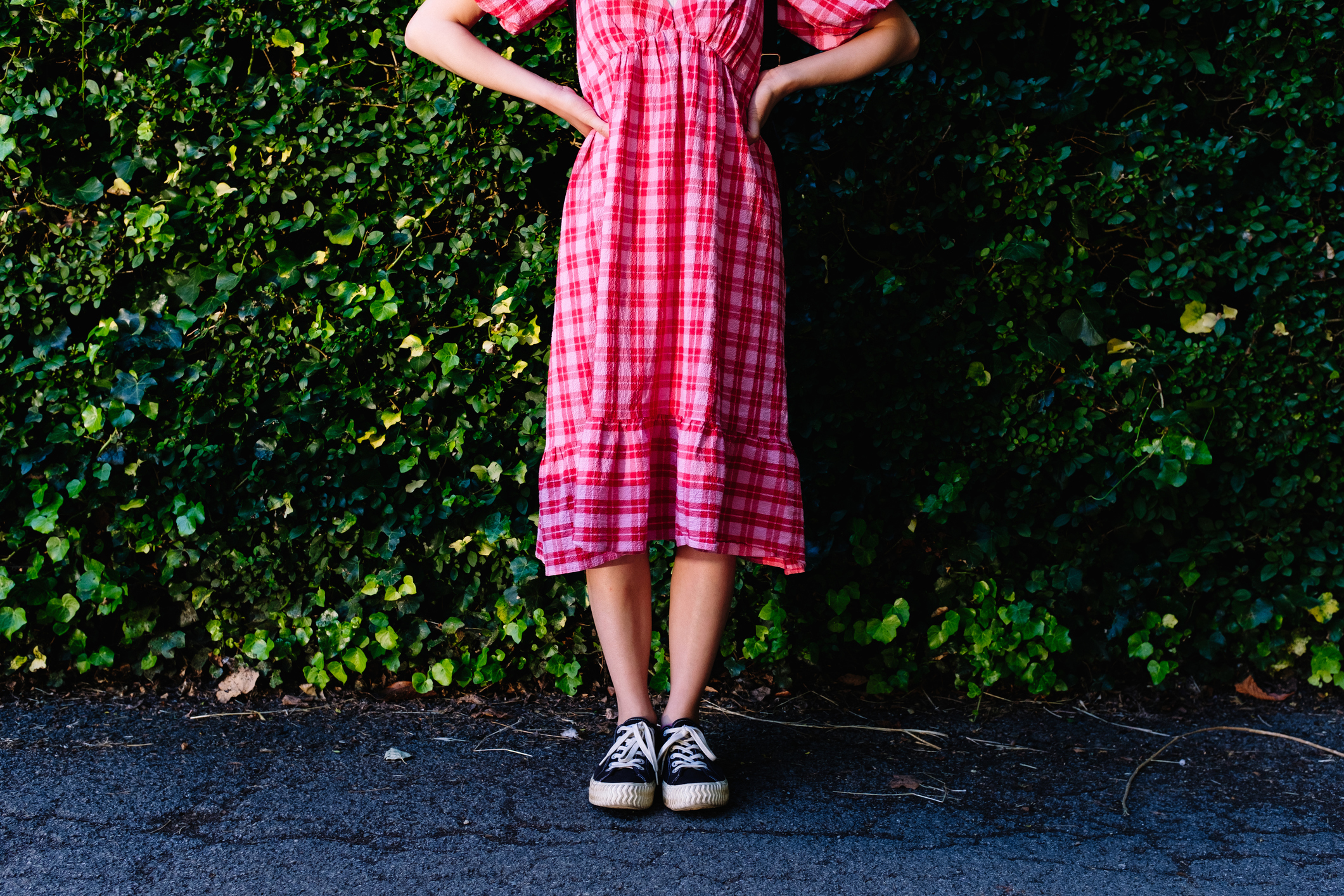
During the COVID-19 pandemic, most of the world was shut away at home, uninterested in going through the trouble of changing out of pajamas, much less purchasing expensive new fashions. But there was a notable exception, a new fashion trend that began selling well and became something of the rage: the Hill House Home Nap Dress. With its puff sleeves, smocked bodice, and long, flowy skirt, the dress was modest, wearable, and comfortable. It was, in a way, an appealing alternative to actually wearing pajamas in public.
Perhaps just as surprising as the popularity of a new fashion item in a decidedly unfashionable time is the source of the dress. Hill House Home was a company that specialized in and sold bedding, towels, and home décor. When she first founded Hill House Home, Nell Diamond cited the inspiration she took from historical prints available in London’s Albert and Victoria Museum, which she grew up visiting. She hoped to bring that British style and sensibility back, in the form of products for modern homes, and she leveraged her management education, earned at Yale Business School, to introduce these inspirations to the world through a direct-to-consumer, digital sales channel.
As a natural extension to the company’s production of sheets, Diamond also introduced some pajamas and robes. But Diamond also remained constantly aware of the pressing need to address consumers’ personal, sometimes latent needs. For example, she realized that, as a parent to infants during the pandemic, she wanted “something that allowed me to feel like myself during a 3:00 am feeding, when I’m so bone-tired and have four thousand emails and I’m thinking about taxes and my laundry and my to-do list….”
To answer her own problem, Diamond designed the Nap Dress. Upon introducing it on the Hill House Home digital site, the product sold out nearly overnight. Then it just kept selling. Eventually, the Hill House Home team grew to six times its original size; the brand opened brick-and-mortar stores in cities like Dallas, Texas, New York City, and Charleston, South Carolina; and consumers purchased more than one million Nap Dresses, as of the end of 2024.
Building on this momentum, Diamond expanded the Hill House Home clothing line into other apparel categories, including shirts, skirts, shoes, and outerwear. She sought out production partners, located across 12 countries, to ensure that the company could meet demand. It started hosting holiday pop-ups, in New York City and on Nantucket, to introduce the offerings to broader ranges of shoppers. Although it still sells home décor items too, Hill House Home largely has transformed itself into a fashion brand, such that clothing accounts for approximately 90 percent of the company’s revenue.
Even if the constraints of the pandemic might have initially inspired the Nap Dress, other, more recent macro-environmental trends have kept it in currency. In pop culture for example, the popularity of the Netflix show Bridgerton and the simulations of Regency-era fashions that its actors wear effectively resonate with the silhouette of the Nap Dress, prompting Diamond to seek out an agreement to allow Hill House Home to introduce a show-branded version of the dress. Recognizing how much fashionable parents enjoy having fashionable children, the company also works with the children’s brand La Coqueta to create smaller-sized fashions, including shirts, shorts, dresses, and pajamas for kids that feature the same patterns and prints that appear on the Nap Dress.
Reflecting on these expansions and experimentations, Diamond has offered the prediction that the Nap Dress will always be the brand’s hero product, yet she also notes that other retail categories have driven some of its more recent growth. For example, and in response to consumer demand, Hill House Home has introduced swimwear lines, which have sold well.
Discussion Questions
- Analyze the various factors contributing to the success of Hill House Home. Would you attribute it to macro-environmental trends like the pandemic, pop culture influences, the direction of the company’s founder, something else, all of the above?
- What is the best product strategy for Hill House Home to maintain and grow its sales in the long-term?
Sources: Emily Mercer, “Hill House Home, La Coqueta Team Up on ‘Mama & Mini’ Capsule,” Yahoo! Life, March 17, 2025; “Nell Diamond,” The Business of Fashion, https://www.businessoffashion.com/people/nell-diamond/; Samantha Kelly, “‘Crazy Growth’: How One Product Created a Multi-Million Dollar Brand,” BBC, November 29, 2024; “About Us,” https://www.hillhousehome.com/pages/about-us.
 Grewal Levy Marketing News