
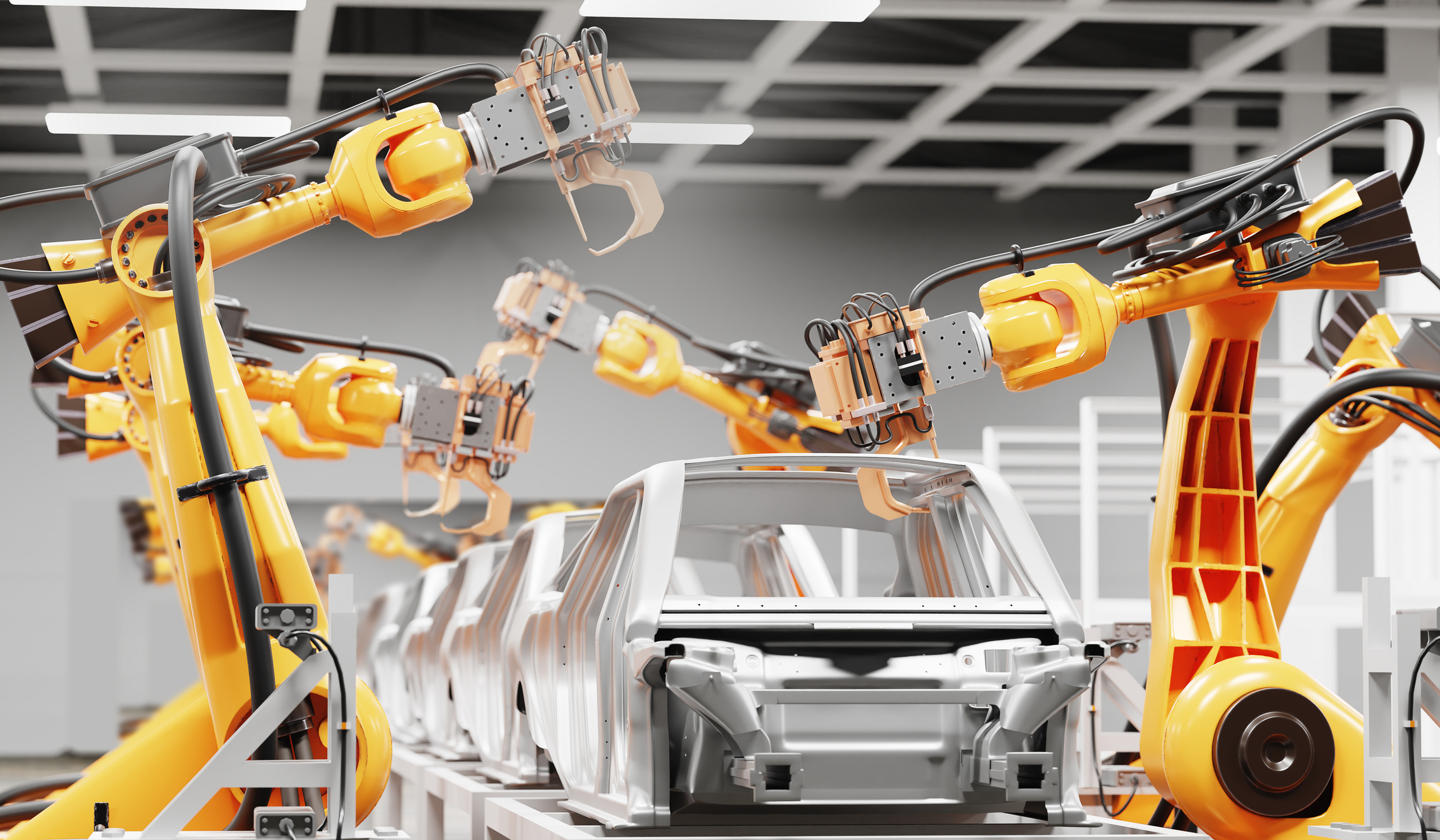
When the American car industry dominated the world, as was the case for most of the twentieth century, Detroit staked its reputation on being the primary site for car manufacturing. As both the national market and regional trends changed though, neither the United States nor Detroit can claim to be the dominant automotive manufacturing hub anymore. Instead, Jinhua, China, is making a legitimate claim to being the main site for the production of automobiles. This shift is not just geographic either, because the production focus in Jinhua is firmly on electric vehicles (EVs).
An estimated 60 percent of all EVs currently are produced in China, as are approximately 80 percent of the batteries used for their construction and operations. The Chinese consumer market accounted for more than 12 million electric and hybrid cars in 2024—almost quadruple the amount sold in the United States that year. A leading Chinese automaker called BYD built more electric cars than Tesla in 2024, surpassing it by nearly 150,000 cars in just the last quarter of the year.
Environmentalists hail this rise in production, especially noting its potential to help China curb its substantial and growing carbon emissions. Furthermore, local leaders hail the expansion of the industry as an example of successful for public planning, describing the new manufacturing sites as meaningful chances for cities like Jinhua to revitalize their local economies. Noting the popularity and effectiveness of its recent initiatives, the Chinese Ministry of Transport also announced plans to introduce electrified trucks to the market soon, and it anticipates that the majority of car sales will be electric as of 2035.
Perhaps not surprisingly, foreign automakers from all over the world have expressed some concern with the notion that China might establish such a powerful, internal supply chain. In particular, companies such as Honda, Volkswagen, and GM previously enjoyed the benefits of entering into joint ventures with Chinese companies, which expanded their access to China’s massive consumer automotive market. Through these partnerships, the foreign brands could assign manufacturing responsibility to domestic plants but still earn price premiums from selling to wealthier Chinese car buyers, who regarded foreign vehicles as a status symbol.
If, instead, China’s own manufacturers can produce better, more efficient, and more numerous EVs, they have little incentive to work with (and share profits with) foreign automakers. The tables have turned, and as a result, European and American car producers have started looking to China for access to electric technology, despite calls by their own governments to invest in developing and producing more EVs themselves.
Such calls and inducements mostly have taken the form of tariffs. Although these international agreements are particularly dynamic these days, they have long been imposed on EVs. At the moment, imports of EVs from China are expressly prohibited by U.S. law. The EU has imposed tariffs of up to 35 percent on Chinese electric cars since 2024.
Even with these legislative and tax supports though, European and U.S. carmakers still lag their Chinese counterparts. For U.S. electric car producers, supply chain shortages loom large; due to tariffs on various component parts that they previously obtained from China (e.g., batteries), they can no longer access necessary materials at reasonable costs or in sufficient scale. Some European carmakers, determined to meet their own local demand, have abandoned U.S. market partners and strategically shifted to develop stronger partnerships with Chinese companies. For example, Volkswagen announced the opening of a $2.7 billion production hub in China, together with the domestic EV manufacturer XPeng.
Discussion Questions
- Faced with these challenging, macro-environmental challenges, what should U.S. carmakers do? Is their best option to (a) develop supply chains that only include U.S. suppliers, (b) seek expanded partnerships with Chinese EV manufacturers, (c) work with European alternatives, or (d) something else? Defend your answer.
- Is the EV market likely to expand, globally? What trends do you predict for different national markets (e.g., U.S. vs. EU vs. China) in terms of EV adoption?
Sources: Christian Shepard, “How China Pulled Ahead to Become the World Leader in Electric Vehicles,”The Washington Post, March 3, 2025; Alimat Aliyeva, “China Intends to Make Electric Vehicles Leader in Car Sales by 2035,” Azernews, April 29, 2025; Felix Richter, “BYD Pulls Ahead of Tesla to Become Largest EV Maker,” Statista, January 3, 2025.
 Grewal Levy Marketing News