While on vacation, people often imagine what it would be like to live in their getaway location. Could they be …
A Home Away from Home Depot or Home Goods
26 Thursday Jan 2023
Posted in Chapter 06: Consumer Behavior

26 Thursday Jan 2023
Posted in Chapter 06: Consumer Behavior
While on vacation, people often imagine what it would be like to live in their getaway location. Could they be …
24 Tuesday Jan 2023
Late at night, after a concert or party or other social event, have you ever thought to yourself, “I would …
21 Saturday Jan 2023
Before the actual soccer matches of this year’s World Cup, Nike released a super fun and inventive—and long, at almost 4.5 minutes—commercial, celebrating the sport, the athletes, and the fans. “Footballverse” imagines a group of scientists who, wanting to find out who is the best soccer player, press some buttons and magically transport a dozen soccer stars to their secret Swiss lab, which has been hastily transformed into a makeshift soccer field. The greats from past and present include Alex Morgan, Carli Lloyd, Cristiano Ronaldo Jr., Edgar Davids, Kevin De Bruyne, Kylian Mbappé, Leah Williamson, Phil Foden, Ronaldinho, Ronaldo Nazário, Sam Kerr, Shane Kluivert, and Virgil van Dijk, as well as some cartoons (who are kicked off the field by the referee). In the ad, they compete against one another, showing off moves—and, in the case of Ronaldo Nazario, his famously strange haircut—in a joyful display that can bring even the sports-allergic into wanting to be part of this game. The ad ends on an inspiring note (or depressing, maybe, if you’re one of today’s players)—the camera landing on the silhouettes of not yet identified athletes, over which is written the words “You’re Up.” Of course, watching “Footballverse” after the conclusion of this year’s games makes it impossible not to notice one athlete who is missing from the commercial: Lionel Messi, the legendary Argentinian soccer player who finally won his first World Cup in 2022—his World Cup photos are the most liked posts on Instagram ever—and who said that this would be his last time competing. Messi is represented by adidas.
Sources: Natalie Venegas, “Nike’s Wildly Fun World Cup Ad Digitally Unites Soccer Legends to Determine Who’s Best,” Adweek, November 16, 2022; Sam Jarden, “Nike World Cup Commercial 2022: Inside ‘Footballverse’ Ad Starring Ronaldinho, Cristiano Ronaldo, Alex Morgan and More,” The Sporting News, November 24, 2022; Diksha Madhok, “Lionel Messi’s World Cup Photos Are Most-Liked Instagram Post Ever,” CNN, December 21, 2022
19 Thursday Jan 2023
Tags
Sustainable fashion is all the rage, and now fine jewelry may be getting in on the trend. Prada—the ultra-fancy, trend-setting Italian luxury clothing brand—has just launched a brand new jewelry line, featuring 48 pieces made entirely of recycled gold and ethically sourced pavé diamonds. Prada spent three years sourcing materials to meet its environmental and ethical standards before the launch. Some of the gold comes from discarded electronics, some from old jewelry. The diamonds are mined, which doesn’t sound very green, but Prada says they meet the Responsible Jewelry Council’s Chain of Custody environmental and humanitarian Code of Practices. Prada also says that its suppliers have been subjected to audits by the company itself, as well as by third-party inspectors from the Responsible Jewelry Council. What’s behind Prada’s venture into jewelry that doesn’t just look pretty, but is also better for the Earth? This choice to go green appears spurred in part by consumer demand—and in part by a mission to lead the way in the jewelry industry. Whether others will follow suit is an open question. The success of this collection is not. According to Timothy Iwata, Prada’s jewelry director, portions of the collection have sold out, and “we can’t keep up with the demand for the moment.”
Sources: Laura Rysman, “Prada Focuses on Sustainability in ‘Disruptive’ Fine Jewelry Debut,” The New York Times, November 21, 2022
17 Tuesday Jan 2023
Tags
As we have recounted previously in these abstracts, Target was something of a game-changer when it came to introducing luxury, exclusive labels and brands to regular shoppers. In infamous, innovative experiments, the mass market retailer made Lilly Pulitzer dresses, Marimekko rugs, and Michael Graves housewares available to regular customers—at least until the popular items sold out. The successes these partnerships bring for all parties have led to their persistence for more than 20 years, as well as Target’s continued efforts to find new collaborations, with an extended view of what makes for a good partner. As a grocery retailer, Marks & Spencer might not seem relevant; it is not a luxury brand in the conventional sense of the word. But the U.K. retailer has a strong, high-end reputation, due to its ability to make grocery shopping seem like an entertaining diversion. Known for turning stores into holiday wonderlands, Marks & Spencer evokes pleasure and attainable luxury. In collaborating with it, for a limited holiday product line, Target is giving customers a means to decorate their holiday dinner tables with fancy salted caramels shaped like pinecones or glittering chocolates. Or they might purchase an array of British delicacies, like shortbread in decorative lanterns, to share as gifts that signal their good taste (literally and figuratively). In line with the overall motivation for Target’s collaborative strategy, the offerings are fancy but affordable; shoppers get to signal that they are classy enough to indulge in British treats, while still keeping their holiday budgets intact.
Sources: George Anderson, “Can Marks & Spencer Help Target Recreate its Designer Collab Magic in Grocery?” Retail Wire, November 1, 2022; https://www.target.com/c/project-wildcat/-/N-s80gx
14 Saturday Jan 2023

For years, we’ve been hearing about how consumers are prioritizing sustainability in the products they spend their hard-earned money on—and companies are adapting to meet that demand.
But should we halt that production line, maybe? A new report finds that consumers care more about durability than they do sustainability. According to surveys of 7,500 consumers around the world, only 16 percent of shoppers said sustainability was one of their top three deciding factors. Even fewer, 12 percent, listed ethical sourcing of their products in the top three.
What did the consumers say they care about? Quality and price were the top factors, with 22 percent of respondents saying those were their primary concerns. (If you like country-by-country breakdowns: U.K. consumers were the most cost-conscious, with 28 percent saying it was the number one factor, while Chinese shoppers cared the least about price—just 6 percent said it was their top consideration.)
Here’s where things get even more interesting: Almost half of respondents said that durability is one of their top five shopping considerations. Forty-three percent of the shoppers said that when buying clothing, transparency is important to their purchasing decisions.
After quality, cost, and durability—the top three concerns—shoppers ranked availability, design, convenience, “makes me feel good,” brand reputation, and then sustainability, as the factors they cared about the most. Then came brand reputation, “makes me look good” (coming in surprisingly low in the rankings), ethical origins/sourcing, ethical worker conditions, and, finally, opinions of friends/others.
The report describes the shoppers’ responses as sending “mixed signals”—a fair observation—but also presenting an opportunity “for businesses to shape the future of sustainability by putting a greater focus on product durability.”
Discussion Questions:
Sources: Tom Ryan, “Is Durability a More Sustainable Selling Point Than Sustainability?” RetailWire, November 16, 2022; “The Missing Billions: The Real Cost of Supply Chain Waste,” rfid.averydennison.com, November 10, 2022
Photo by Lindsey Hogue on Unsplash
12 Thursday Jan 2023

Can suburban favorite Panera make it in the big city? We’re about to find out! The fast-casual restaurant chain, known for its large, comfortable stores in locations with lots of parking, recently announced two new concepts for the urban crowd.
Panera To Go is a 1,000-square-foot, pickup-only store that will have no seating. The first Panera To Go opened in Chicago this summer. Two more Paneras To Go are coming to New York City, with the first store scheduled to open before the end of the year. The plan is to open more Paneras To Go over the next year, in other cities but also in crowded settings like universities and hospitals.
The second new format, which does not appear to have an official name—RetailWire calls it the Urban Core, but this name does not appear anywhere else, including in Panera marketing materials—is 40 percent smaller than the traditional Panera store, with “updated ordering kiosks, a fully digitized menu and a new tracking screen providing more detailed order status,” according to a press release. The stores will have limited counter seating, focusing more on preserving space for shelves where customers and delivery drivers can pick up orders.
Digital sales now make up about 50 percent of Panera’s sales, and the company touts both of its new store formats as “digital driven.” Panera To Go will only offer digital ordering. The second concept will have ordering kiosks, a fully digitized menu, and a tracking screen so hungry customers can obtain real-time status updates about their meal.
Still, Panera’s chief brand & concept officer Eduardo Luz was quick to reassure consumers that Panera is not planning to replace existing stores with these new concepts: “For us, it’s ‘and’, not ‘or’,” he said. “We’re just expanding our customer base.”
Discussion Questions:
Sources: Tom Ryan, “Will Two Digital-First Concepts Prove More Successful than One for Panera Bread?” RetailWire, November 15, 2022; Elizabeth Segran, “Panera’s Big Bet on Urban Diners? Smaller Restaurants,” Fast Company, November 8, 2022; Joanna Fantozzi, “Panera Bread Is Opening Its First Digital and To-Go Stores in New York,” Nation’s Restaurant News, November 8, 2022; “Panera Targets Expansion in Urban Markets Driven by Portfolio of Digitally-Led New Bakery-Cafe Formats,” businesswire.com, November 8, 2022
Photo by Pedro Forester Da Silva on Unsplash
10 Tuesday Jan 2023
Posted in Chapter 06: Consumer Behavior
It’s been a rough economic year for many consumers, which has translated into a notably profitable economic year for the discount giant Walmart. The mega-retailer reported an 8.2 percent gain over last year’s sales for the third quarter, with shoppers both spending more overall and buying more stuff.
It may not be a surprise that a company known for great prices and deep discounts would do well in a time of record inflation. What’s notable is who is buying from Walmart now. About 75 percent of the retailer’s increase in sales is from shoppers making $100,000 or more per year.
With food inflation up 12.4 percent over a year ago, these well-off shoppers largely spend their dollars on groceries. Walmart’s grocery sales saw “mid-teens growth,” Walmart said in an earnings call, continuing a trend that began earlier in the year. “During a period of time when people are more sensitive to price, it makes sense that they would increase the amount of their wallet that would be coming to Walmart because of value,” said Walmart CEO Doug McMillon. “Regardless of income levels, families are more price-conscious now.”
Shoppers are “trading down” to save money, according to Walmart—increasing their spending on the store’s private-label items, which cost less than brand name alternatives. Consumers also bought less expensive proteins, like beans, peanut butter, and hot dogs, over more expensive options, along with cheaper versions of baking goods, baby food, and dog food.
The trick now is holding onto these new customers, something Walmart thinks it can do. “If we can stand tall during this period of time, we think they’ll keep coming back to us because we do have quality, we do have value, and we’ve created a lot more ways for them to save time in the store and with pickup and delivery,” McMillon said. “So, that’s what we’re out to do.”
Discussion Questions:
Sources: George Anderson, “Can Walmart Hold onto the New, Wealthier Customers It Is Picking Up?” RetailWire, November 16, 2022; Ines Ferré, “Walmart: $100K+ Income Households ‘Shopping with Us More Often’,” Yahoo, November 15, 2022; “Walmart Inc. (WMT) Q3 2023 Earnings Call Transcript,” fool.com, November 15, 2022; Avery Hartmans, “People Who Make More than $100,000 a Year Are Grocery Shopping at Walmart, and It’s Giving the Chain a Major Edge over Its Rivals,” Insider, November 20, 2022; Lauren Debter, “Walmart Attracting Wealthier Customers Looking for Cheaper Groceries as Inflation Rages,” Forbes, November 15, 2022
Photo by Marques Thomas on Unsplash
07 Saturday Jan 2023
Posted in Chapter 16: Supply Chain Management
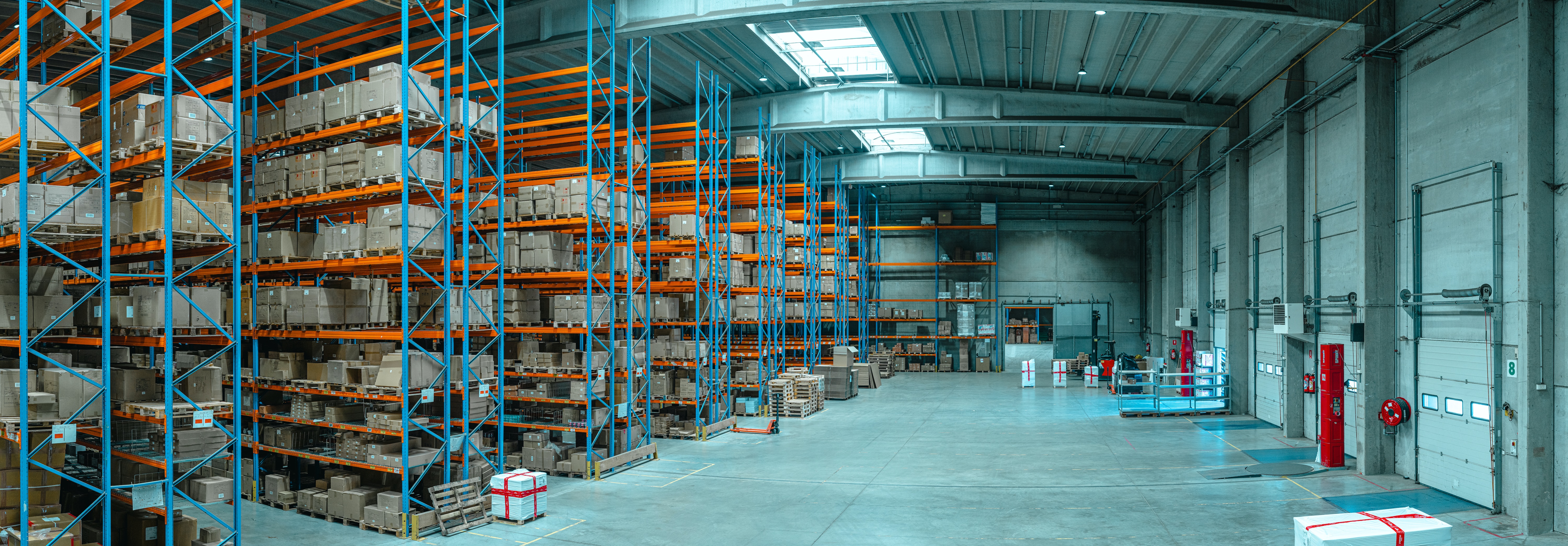
Recent years’ supply chain woes, especially in international production models, have been annoying to consumers, but they have been devastating to the companies whose business models rely on being able to get actual products to shoppers in a reasonably timely manner. Instead of raising the white flag, some U.S. businesses have decided to tackle the problem head-on, and bring their production back to the United States—a decision that has become common enough that it has a name: reshoring.
Consider the story of Ken Rosenblood, whose company obVus Solutions, which produces ergonomic furniture, was “destroyed” when products got stuck in transit from China to the United States. “If you run out of product, you are persona non grata,” Rosenblood said. “We had to completely start over.”
Starting over entailed turning an old, 18,000-square-foot former furniture store into a brand new factory. The conversion cost $4 million, and the factory began making its products in October. It also took Rosenblood figuring out how to adapt his needs to realities, and opportunities, on the ground—for example, switching to recycled aluminum because not enough non-recycled aluminum was available, and producing his own nuts and bolts for a fraction of what suppliers would charge.
Many other companies are reshoring production as well, partly due to their desire to avoid the risk of international supply chain nightmares again, and partly in response to incentives provided for in the recently passed Inflation Reduction Act. Just days after President Biden signed the IRA into law in August, Honda and LG Energy announced their plans for jointly building a $4.4 billion battery plant. Chip manufacturers are coming back to America, sparked by the CHIPS and Science Act of 2022, also signed in August, which provides $52.7 billion in incentives to bring production back onshore.
Reshoring offers a host of advantages, including greater flexibility and faster production. Of course, it creates challenges too, such as finding workers in a tight labor market, needing lots of capital to get started, and having to learn how to organize work and product flows in this brand new setting. But then again, entrepreneurs are nothing if not risk takers who regard tackling problems as they encounter them to be a standard operating procedure. They see opportunity in a challenge. As Rosenblood noted, when all is said and done, he wagers that he will be able to produce his goods for the same cost, if not less, than he paid to have them made in China, and “I hate to lose a bet.”
Discussion Questions:
Sources: Amy Haimerl, “Weary of Snarls, Small Businesses Build Their Own Supply Chains,” The New York Times, October 19, 2022; Lucas Mearian, “As Reshoring Brings Chipmakers Back to the US, Apple Looks to Jump on Board,” Computerworld, December 6, 2022
Photo by Jacques Dillies on Unsplash
05 Thursday Jan 2023
Tags

When companies merge, leaving a mega-corporation with no competitors, consumers suffer. The most recent example of this general capitalist truism comes in the form of fallout from the federal government allowing Live Nation and Ticketmaster to merge in 2010. What fallout, you ask? Ask anyone who recently tried to get a ticket to see Taylor Swift live. Not only were there not enough tickets to go around, but the Ticketmaster website was, to put it kindly, a freaking mess, with glitches, bugs, error messages, and hours-long wait times for ticket purchases to go through.
Columnist Binyamin Appelbaum traces the Taylor Swift debacle to the government’s tendency to be too credulous when companies promise that their merger will not be detrimental for customers. In 2010, for example, the Justice Department released a press release in which it confidently asserted that Ticketmaster and Live Nation’s merger would “protect competition for primary ticketing” and “maintain incentives for innovation and discounting”—none of which has come to pass. Instead, a nearly universal view reflects widespread agreement that Ticketmaster’s virtual monopoly in the concert ticket arena led to Swift-gate.
It is not the only example though. Various Department of Justice–approved mergers have allowed for and led to monopolies, which in turn produced negative outcomes such as stifled innovation, laziness on the part of the now-insulated companies, and consumers who are worse off. When the DOJ allowed T-Mobile to acquire Sprint in 2019, it produced less competition when it comes to the price of mobile services. When Dollar Tree acquired rival Family Dollar in 2015, the DOJ required the two companies to divest themselves of more than 300 stores and create another, competing company—Dollar Express—which then went bankrupt within two years, having allegedly been pushed out of business by market-dominant Dollar Tree’s predatory practices.
Applebaum asks why the government “didn’t just prevent Dollar Tree from buying Family Dollar” in the first place. Of course, even with an answer to that question, it would be too late to go back in time and fix the mistake. But in the last couple of years, perhaps learning from its experience, the federal government seemingly has been exercising deeper scrutiny of proposed mergers. For example, the DOJ recently successfully blocked book publisher Penguin Random House from buying its rival publisher Simon & Schuster.
In light of the Taylor Swift ticket disaster, the Department of Justice also has opened an antitrust investigation into Ticketmaster’s parent company, Live Nation. It may be too late to see Taylor Swift live this time, but thinking ahead to the next tour, you just might be able to score some tickets.
Discussion Questions:
Sources: Binyamin Appelbaum, “Overconfident Regulators Caused the Ticketmaster Mess,” The New York Times, November 23, 2022; “Justice Department Requires Ticketmaster Entertainment Inc. to Make Significant Changes to Its Merger with Live Nation Inc.,” justice.gov, January 25, 2010; Alex Abad-Santos, “How Disappointed Taylor Swift Fans Explain Ticketmaster’s Monopoly,” Vox, November 21, 2022; David McCabe and Ben Sisario, “Justice Dept. Is Said to Investigate Ticketmaster’s Parent Company,” The New York Times, November 18, 2022; Winston Cho, “Fear for Your Megamergers: The Justice Dept. Is (Finally) Taking Action,” The Hollywood Reporter, November 19, 2022
Photo by Chaz McGregor on Unsplash
 Grewal Levy Marketing News