
• Dhruv Grewal
  • Michael Levy
  • Podcast
  • Videos
  • Digital
  • Newsletters

Grewal Levy Marketing News

Grewal Levy Marketing News

Author Archives: Grewal Levy Marketing

How Detroit Army Became the Unofficial Uniform of Detroit Lions Fans

25 Tuesday Mar 2025

Posted by Grewal Levy Marketing in Chapter 20: Personal Selling and Sales Management

≈ Leave a comment

Tags

head, merch, merchandise, NFL
istockphoto / TennesseePhotographer

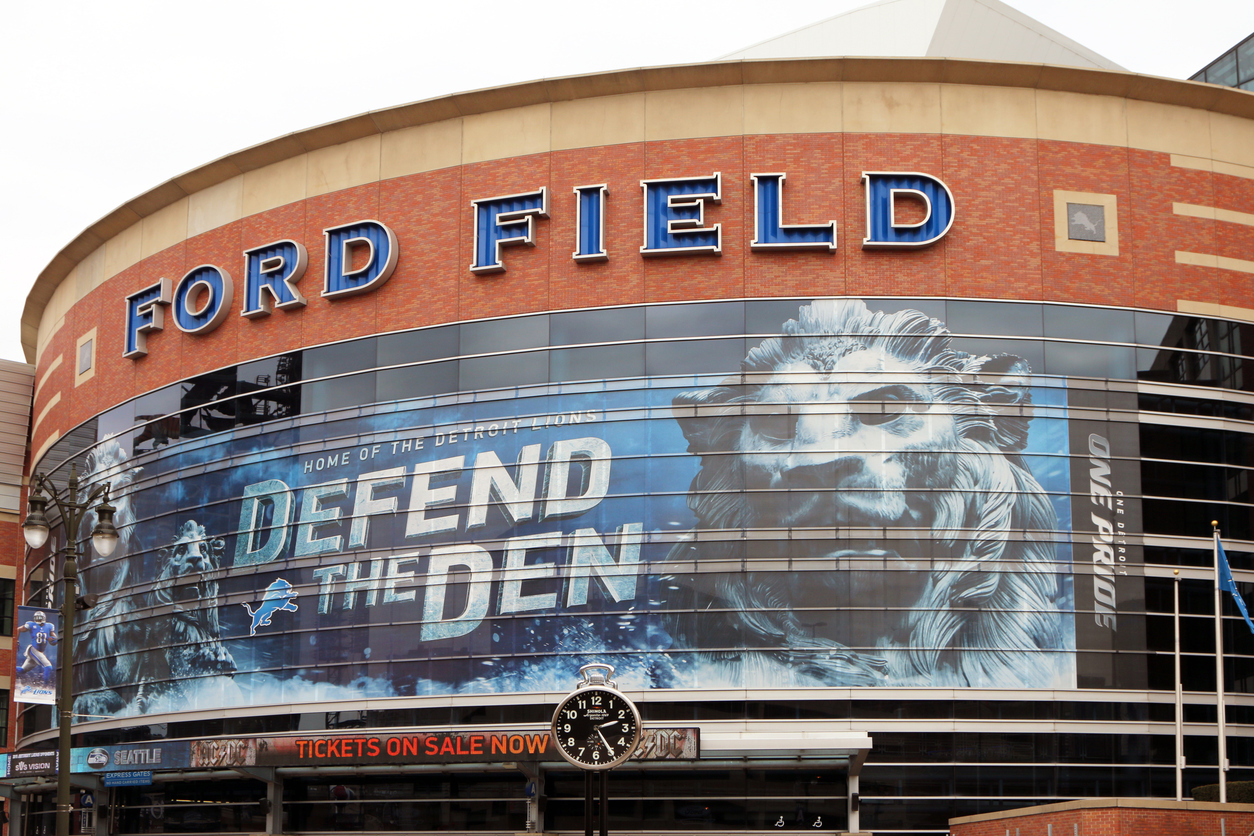
For many years, admitting to being a fan of the Detroit Lions was something people did with their heads hung and a bit of regret in their voice. One of the few NFL teams never to have won a Super Bowl, the Lions suffered years—nay, decades—of losing records. Yet like the scrappy Midwestern town they represent, Detroit fans refused to give up completely, demonstrating their commitment through thick and thin. 

Consider Todd Lansky, who maintained his fandom even while living in the home of the Lions’ division rivals, the Chicago Bears. To proclaim his loyalty, Lansky designed some hats and t-shirts that he and his pals could wear to their local pickup basketball games. They referred to themselves as the Detroit Army—a collection of Detroit expats who found one another in Chicago and offered the moral support needed to remain a fan of a losing team. Encouraged by the popularity of his gear, he started selling hats and shirts on the side, developing a tiny retail operation.

When the Lions hired Dan Campbell in 2021, we can only imagine the excitement of the Detroit Army. Campbell came in with a brash attitude and a determination to win, and his success has been remarkable, leading the team to the playoffs in the past two seasons. The combination of his no-nonsense attitude and ability to inspire realistic hope among Lions fans has transformed him into one of the most popular sports figures in the NFL today. When Campbell makes an announcement or a promise, fans pay attention. 

Todd Lansky is a fan too, which is why he sent some of his Detroit Army gear to Campbell on a lark. But imagine what happened when Campbell, in a nationally televised pregame interview with Michael Strahan on Fox Sports, sported a Detroit Army trucker hat on his head. Lansky likely had no idea what his personal selling initiative would bring about: Within 3 minutes of the broadcast starting, the Detroit Army received 379 requests to place orders. A year later, it racked up nearly 3,000 orders placed and delivered.

But the company still remained mostly a hobby. Although Lansky—an attorney by trade—was smart enough to have trademarked the Detroit Army name and logo early on, he did not initially imagine it as his primary business. As the orders poured in, he quickly worked to develop a more functional website. His teenaged daughter helped set up the company’s Instagram account and coached her dad on how to post compelling content. Even as the marketing tactics they use gain sophistication and traction though, personal selling remains central to the company’s approach. Lansky sends a care package of updated Detroit Army merchandise every couple of weeks to Campbell and other coaches. These public figures frequently and voluntarily wear the gear, praising the brand’s local identity and authenticity, as well as its underlying goal of bringing Lions fans together. Other than the free swag, the Detroit Army does not offer the coaches any compensation; they wear it because they want to. 

Thus, the Detroit Army might have a lot of fans and recruits, informally. But so far, the company remains a one-person operation (at least until Lansky’s daughter graduates from college and, he hopes, joins him in running it). Still, as the company itself claims “Detroiters are fiercely loyal to their hometown. That’s why it works.”

Discussion Questions 

  1. At what point will the Detroit Army need to scale up its operations to meet demand? What sort of marketing plan would you design and recommend to Todd Lansky?
  2. Is sending free merchandise an effective marketing tactic? When and in what sort of conditions is it likely to be more or less successful?

Sources: Scott Cacciola, “As the Detroit Lions Surge, Fans Flock to an Unofficial Uniform,” New York Times, January 17, 2025; Eric Woodyard, “Six Stories that Explain Lions Coach Dan Campbell,” ESPN, December 14, 2022; “Our Story,” Detroit Army, https://detroitarmy.com


All the Rage: Vuori Corners the Athletic Work Apparel Market

20 Thursday Mar 2025

Posted by Grewal Levy Marketing in Chapter 05: Analyzing the Marketing Environment, Chapter 06: Consumer Behavior, Chapter 09: Segmentation, Targeting and Positioning, Chapter 10: Marketing Research

≈ Leave a comment

Tags

atheltic, casual style, dress code

istockphoto / ismagilov

Steve Jobs had his black turtlenecks. Mark Zuckerberg favors hoodies. These famous figures might not be known for their fashion sense, but their example seemingly is defining what young professionals consider to represent appropriate office attire. Especially as working from home continues to represent an appealing option, more companies—whether they allow work from home or hope to encourage employees to come back to the office—are lowering the strict standards for what is required for people to wear. In response, young, affluent executives have embraced work “uniforms” that provide just as much comfort as their casual and athletic gear. And in this broader environment, Vuori is enjoying remarkable growth.

The brand first came to fame for its tech pants, which were designed with a tapering, semi-formal design but produced with human-made, technical textiles, such as nylon and polyester. They offer breathability and moisture-wicking capacities, and they move and stretch far more than cotton, wool, and other conventional materials used to make pants. Therefore, while they look (at least from some distance) like conventional suit trousers, the pants offer comfort similar to that provided by athletic gear like sweatpants. Its offerings have created a new subcategory of apparel, involving active, casual gear that also looks professional.

Although athleisure has long been a meaningful industry sector, athletic styles of work wear are something different. Rather than just a different type or style of leggings, Vuori innovated a distinctive, unique design. When consumers try out this alternative, they also assign it high marks in terms of the fit it offers, its performance, and, particularly, its comfort level. Therefore, once they try it, they seemingly switch quickly away from other versions, like leggings, that also do not offer the same level of professionalism. For example, in 2018, only 1.2 percent of consumers who shopped at Lululemon also shopped at Vuori; by 2024, that rate had increased to 7.8 percent. 

Noting Vuori’s consumer appeal and growing market share, investors contributed an estimated $825 million to its latest round of funding, prompting a late-2024 valuation of $5.5 billion. Thus, even if Vuori has not totally cornered the market for active wear, it can stake its claim for achieving one of the largest initial public offerings in the retail industry. In the meantime, it is working to spread its vision of office wear to global markets, through investments in expanded and aggressive marketing efforts. Already available in 18 countries, Vuori has indicated its plans to sell its products in more than 100 stores, throughout Europe and Asia, by the end of 2026.

Discussion Questions

  1. Take a look at Vuori’s pants design. Does it represent a truly new design, or is it just another type of athleisure?
  2. Is the active casual wear market a growing one, or does it offer limited share?

Sources: Max Berlinger, “How Vuori Became One of the Hottest Names in Fashion,” The New York Times, January 18, 2025; Daphne Howland, “With Latest Investment, Vuori’s Valuation Hits $5.5B,” Retail Dive, November 11, 2024; Gabrielle Fonrouge, “How Vuori Reached a $5.5 Billion Valuation By Taking Share From Lululemon,” CNBC, December 19, 2024;

U.K. Government Explores the Use of Emissions Zones and Surveillance Technology

18 Tuesday Mar 2025

Posted by Grewal Levy Marketing in Chapter 04: Conscious Marketing, Corporate Social Responsibility, and Ethics, Chapter 06: Consumer Behavior, Marketing Tidbits

≈ Leave a comment

Tags

data, Government, nhs, privacy

London’s government appears determined to lower emissions; it also appears strapped for cash. The global capitol introduced an ultra-low emission zone plan in 2019, which imposed a daily fee on polluting vehicles (gas cars built before 2006, diesel engines built before 2015) that came into central London. By 2023, the fees applied throughout Greater London. The goal was to lower the emissions created in the city and encourage greater uses of more sustainable transportation options. Building on these efforts, London’s mayor Sadiq Khan recently suggested adding surveillance systems and monitors throughout the city, to track cars as they entered the ultra-low emission zones. At the same time, the national government reportedly is considering monetizing satellite surveillance technology that could be used to track the vehicles. Seeking these alternative sources of revenue seems critical; efforts to encourage consumers to switch to electric cars promise to eliminate approximately 25 billion pounds worth of revenue that the country currently earns from fuel taxes. Yet shifting the burden to consumers raises some legitimate questions too. The emission plan arguably affects working-class people disproportionately and detrimentally. As the cost of living in London has risen to untenable levels, they have fled to more remote areas, which offer relatively fewer public transportation options. Other challenges to the policies raise questions about their efficacy; an Imperial College London study suggested that the emission zones actually had little effect on air quality, at least in the months following their implementation. Lawmakers must come together quickly, to weigh policy options that will balance fiscal goals with public interest.

Sources: Phillip Inman, “If You Let Google Have Your Data, Why Not the NHS?” The Guardian, October 19, 2024; “The Ultra-Low Emission Zone for London,” London Assembly

Right on Schedule? How the U.S. Department of Transportation Is Dealing with Flight Delays

13 Thursday Mar 2025

Posted by Grewal Levy Marketing in Chapter 04: Conscious Marketing, Corporate Social Responsibility, and Ethics, Chapter 13: Services: The Intangible Product

≈ Leave a comment

Tags

Airlines, delay, fine, flying, penalty, regulation

istockphoto / Torsten Asmus

Flight delays are, at some point, unavoidable. There are thousands of elements that must go right for airline travel to happen smoothly and safely, and even if airlines could realistically be expected to avoid every single mechanical issue that might arise in their planes or schedule staff perfectly, they still must deal with the completely uncontrollable influence of weather conditions. Thus, for the most part, airlines can and should be forgiven for reasonable, occasional flight delays and cancellations. 

But reasonable and occasional are very different from preventable and chronic, and the U.S. Department of Transportation (DOT) seems determined to establish this distinction. In recent moves, it has fined JetBlue and Frontier for their persistent records of delays. The fines—$2 million to JetBlue, $650,000 charged to Frontier—go partially to compensate affected passengers. 

Then it brought a $2.1 million suit against Southwest Airlines, alleging that in 2022, two of the airline’s regularly flight paths featured a habitual pattern of late arrivals. Passengers flying between Chicago and Oakland or between Baltimore and Cleveland—two routes that were scheduled at least 10 times per month—would arrive late (by at least a half hour) more than half of the time. According to the U.S. DOT, that signals a chronic pattern. Furthermore, the DOT has estimated that about 90 percent of those delays were preventable. Therefore, it alleges that the airline failed to live up to its legal obligation, which requires it to establish and publish actually realistic flight schedules so that passengers have ready access to reliable information that supports their own planning efforts. 

Beyond the impacts on travelers trying to get to Oakland or Cleveland on time, Southwest’s chronic delays constitutes an anticompetitive practice, according to the DOT. Specifically, it advertised and marketed these flights, as occurring in accordance with the published schedule. Because it could not live up to that promise, Southwest arguably was engaged in deceptive advertising that could give it an unfair competitive advantage. 

Perhaps unsurprisingly, Southwest denies the allegations. It regards the accusations as outdated and, while recognizing that those routes suffered issues in the past, highlights its successful completion of approximately 20 million on-time flights since the legislation that enforces punishments for chronic delays passed in 2009. 

Discussion Questions 

  1. Are fines of airlines that run chronically delayed flight paths appropriate? Are they fair? Take the perspective of the punished airline, its competitors, and travelers to develop your answer.
  2. What are some other ways to incentivize airlines to deal with and avoid chronic delays?

Sources: Niraj Chokshi, “U.S. Sues Southwest Airlines over Chronic Delays,” The New York Times, January 15, 2025; Ayana Archie, “The Transportation Department Sues Southwest Airlines for Alleged Oft-Delayed Flights,” National Public Radio, January 16, 2025; “DOT Sues Southwest Airlines for Chronically Delayed Flights,” Department of Transportation, January 15, 2025

Gallery

Is Trial an Error? Amazon Ends the Try Before You Buy Program

11 Tuesday Mar 2025

Posted by Grewal Levy Marketing in Chapter 02: Developing Marketing Strategies, Chapter 12: Developing New Products

≈ Leave a comment

Tags

Amazon, buy, return, trial

This gallery contains 1 photo.

Combining the functionality of in-person shopping with the ease of e-commerce, Amazon’s “Try Before You Buy” service represented substantial additional …

Continue reading →

Gallery

Is Multilevel Marketing Defunct as a Sales Model?

18 Tuesday Feb 2025

Posted by Grewal Levy Marketing in Chapter 20: Personal Selling and Sales Management

≈ Leave a comment

Tags

change, multilevel marketing (MLM), past, present

This gallery contains 1 photo.

A friend of a friend of a friend is a phrase that perhaps best encapsulates the target market for a multilevel …

Continue reading →

Gallery

Fashion Victim: U.S. Government Blocks Luxury Brand Acquisition

13 Thursday Feb 2025

Posted by Grewal Levy Marketing in Chapter 04: Conscious Marketing, Corporate Social Responsibility, and Ethics, Chapter 15: Strategic Pricing Concepts

≈ Leave a comment

Tags

anti-trust, court, judge

This gallery contains 1 photo.

Whether regarded as superfluous accessories or vital resources, handbags have a long and storied history, and their different versions can …

Continue reading →

Gallery

Piece of Cake: How Luxury Brands Are Luring Customers with Treats

11 Tuesday Feb 2025

Posted by Grewal Levy Marketing in Chapter 17: Retailing and Multichannel Marketing, Chapter 20: Personal Selling and Sales Management

≈ Leave a comment

Tags

coffee, luxury, shopping, snacks

This gallery contains 1 photo.

When it comes to luxury retail, the shopping experience can matter as much as the product. Such influences are especially …

Continue reading →

Gallery

Sneakerheads: Walmart Inks Shoe Deal with StockX

04 Tuesday Feb 2025

Posted by Grewal Levy Marketing in Chapter 07: Business-to-Business Marketing, Chapter 09: Segmentation, Targeting and Positioning, Chapter 17: Retailing and Multichannel Marketing, Chapter 18: Integrated Marketing Communications

≈ Leave a comment

Tags

anti-trust

This gallery contains 1 photo.

Sneakers, trainers, kicks: whatever you call them, there’s a big market for running shoes these days. And Walmart plans to …

Continue reading →

Gallery

Charged Up: Madrid Bans E-Scooter Rentals

30 Thursday Jan 2025

Posted by Grewal Levy Marketing in Chapter 04: Conscious Marketing, Corporate Social Responsibility, and Ethics

≈ Leave a comment

Tags

ban, city, scooter

This gallery contains 1 photo.

With gas prices on the rise, and the climate crisis front of mind, the future seems electric: car, bikes, and …

Continue reading →

← Older posts
Newer posts →

Enter your email address to subscribe to this blog and receive notifications of new posts by email.

Blog Stats

  • 355,713 views

Archived Articles by Chapter

  • Chapter 01: Overview of Marketing (81)
  • Chapter 02: Developing Marketing Strategies (152)
  • Chapter 03: Social and Mobile Marketing (176)
  • Chapter 04: Conscious Marketing, Corporate Social Responsibility, and Ethics (183)
  • Chapter 05: Analyzing the Marketing Environment (243)
  • Chapter 06: Consumer Behavior (204)
  • Chapter 07: Business-to-Business Marketing (91)
  • Chapter 08: Global Marketing (129)
  • Chapter 09: Segmentation, Targeting and Positioning (164)
  • Chapter 10: Marketing Research (109)
  • Chapter 11: Product Branding and Packaging Decisions (224)
  • Chapter 12: Developing New Products (197)
  • Chapter 13: Services: The Intangible Product (158)
  • Chapter 14: Pricing Concepts for Establishing Value (105)
  • Chapter 15: Strategic Pricing Concepts (109)
  • Chapter 16: Supply Chain Management (124)
  • Chapter 17: Retailing and Multichannel Marketing (222)
  • Chapter 18: Integrated Marketing Communications (172)
  • Chapter 19: Advertising, Public Relations and Sales Promotions (204)
  • Chapter 20: Personal Selling and Sales Management (65)
  • Marketing Tidbits (49)
  • Uncategorized (17)

Tags

advertising AI Amazon Analytics apple Artificial Intelligence B2B Marketing brand branding China coca cola Conscious Marketing consumer behavior data Developing New Products Disney ethics Facebook fashion food global global marketing Google + green health india Integrated Marketing Communication integrated marketing communications luxury Macy's marketing Marketing Environment Marketing Ethics Marketing Research marketing strategies Marketing Strategy Marketing Tidbit mcdonalds mobile mobile commerce Mobile Marketing Multichannel Marketing netflix New Product Development Nike Overview of Marketing p&g Packaging Positioning pricing Pricing Concepts Private label Product Branding Public Relations rebranding repositioning retailers Retailing sales management segmentation services Social and Mobile Marketing social media Starbucks Strategic Pricing supply chain Supply Chain Management sustainability Target targeting technology twitter Walmart Whole Foods Youtube

Blog at WordPress.com.

  • Subscribe Subscribed
    • Grewal Levy Marketing News
    • Join 547 other subscribers
    • Already have a WordPress.com account? Log in now.
    • Grewal Levy Marketing News
    • Subscribe Subscribed
    • Sign up
    • Log in
    • Report this content
    • View site in Reader
    • Manage subscriptions
    • Collapse this bar
 

Loading Comments...