All Roads Still Lead to Rome: Italist Continues Its Global Expansion

Tags

, , ,

istockphoto / nrqemi

What images does the word “Italy” conjure for you? For some, it’s delicious pizza and pasta. For others, it’s beautiful scenery and winding roads through vineyards, all under a Tuscan sunset. But for some people, understanding the true beauty of Italy means recognizing the designs that it has sourced, especially those represented by high-end automobiles and luxury fashion. 

And Italist, a company that has partnered with more than 2,000 luxury brands to sell designer apparel at discounts, aims to leverage and cater to the vision of Italy as the fashion epicenter. It operates in what historically has been called luxury’s grey market, such that the marketplace sells authentic products at a significant discount. Many of the firms competing in this sector achieve the ability to offer discounts by engaging in strategic parallel importing, which enables them to take advantage of varying pricing across regions. If a Saint Laurent bag sells for $2,800 in mainland Europe, the same product might be offered for $3,700 in South Korea. Grey market companies make the products available to buyers in Korea at the same price they would charge to shoppers in Germany.

In many cases, national rules and regulations discourage such practices. Instead of working around these nationally imposed laws though, Italist takes a different and more straightforward approach: It pays all the customs fees and duties upfront. Thus for example, it pays sales taxes in the United States and local VAT taxes in European countries—the first grey market luxury brand to do so. Not only does this strategic choice help it avoid sanctions or fights with local authorities, but it also saves customers from having to pay those additional fees. 

Beyond its legal and pricing strategies, Italist’s product assortment represents a critical component of the value of its offering. Its curated selection is unique and proprietary. Italist especially prides itself on offering trending products, still at discounted prices, before any of its competitors can list the items. In an extension of this effort, Italist invests strongly in brand discovery, seeking out and offering luxury brands that may not be widely known—yet.

With these carefully thought out approaches to pricing, logistics, and assortments, Italist enjoys an enviable position. During a period of overall decline in luxury goods markets throughout 2024, Italist reported revenue increases. Despite rising logistics costs worldwide, including more oppressive customs fees in many nations, the company also has maintained its four-day free shipping standard worldwide.

As Italist eyes further global expansion, the company also acknowledges the challenges associated with certain markets. It has had trouble selling in China, where the central government strongly prioritizes and promotes websites run by Chinese-based companies. Doing business in the United States also appears likely to become more difficult, assuming that the new tariffs threatened by the Trump administration get imposed. The extent of the impact on Italist and its go-to-market model remains to be seen, but if the United States starts to impose substantial tariffs on products imported from Europe, U.S. consumers will likely find some of the prices they have come to expect on Italist reach unexpected levels.

Discussion Questions 

  1. Have you shopped on Italist? If not, what factors would be required to get you to try it in the future?
  2. If U.S. tariffs on imports really do increase, how can Italist adjust its business model to compensate?

Sources: Elizabeth Paton, “Luxury’s Gray Market Is Emerging from the Shadows,” The New York Times, August 24, 2021; “Italian Luxury Fashion at a Discount: Italist’s US Expansion,” PYMNTS, August 28, 2024; Sharon Edelson, “Italist Continues to Grow in the Luxury Ecommerce Marketplace,” Forbes, January 17, 2025

Lost in the Shuffle: The Challenges Facing New CEOs

Tags

, , ,

istockphoto / BongkarnThanyakij

What do coffee, sneakers, and airplanes have in common? For some of the biggest names in these markets, their shared characteristic is change. That is, Starbucks, Nike, and Boeing have all undergone the upheaval of losing their existing chief executive officers and bringing in new leaders, with radically different ideas and approaches, to run things. Although still in the early months of their tenures, some of them already appear to be faring better than others.

After Starbucks faced its third consecutive quarter of falling demand—seemingly due to increased competition in China and boycotts of the brand following conflict in the Middle East—it brought in Brian Niccol to revert course. The former CEO of Chipotle, Niccol is something of an expert in turning companies around. He plans to return Starbucks to its original brand identity and reestablish the physical stores as community coffee houses. Niccol has also vowed to simplify the menu and improve staffing levels. Investors seemed happy with the appointment; Starbucks shares increased by 24.5 percent on the day it was announced.

Elliot Hill’s appointment as CEO of Nike followed a year in which stock prices fell 25 percent and revenue was down 10 percent. In his first few weeks at the helm, Hill earned praise for his strategic determination and success in negotiating a 12-season extension of Nike’s partnership with the NBA. But the real test for Nike remains, because Hill must find a way to inspire the established company to create more innovative, appealing products that can compete with trendy, new, hipper sneaker companies like Hoka and On. Nike’s ability to tap into the aesthetics of athleisure, in a way that also creates a more compelling brand image, will likely be what decides its economic future.

And finally, there’s Boeing, with its widely publicized and deeply dangerous product failures. Although notable events like doors flying off planes are recent, expert observers believe the source of many of the company’s problems actually began in the 1990s, when the company exhibited a clear change in focus, prioritizing profit over engineering quality. The installation of Kelly Ortberg as CEO in August 2024 was supposed to help resolve the problems, not make them worse. But even as Ortberg vowed to improve the workplace culture at Boing, strikes by union workers cost the company an estimated $1 billion per month. Boeing reported a $6 billion loss in just the third quarter of 2024, one of the biggest in the company’s history.

Turnarounds of big companies are possible, and the narratives of how they happen make up much of the lore surrounding the genius of company leaders. For example, stories of how Apple and General Motors recaptured market share after periods of decline continue to inspire managers at various hierarchical levels. But success is never guaranteed, and the new leaders of these three companies confront massive pressures to make the right choices. The survival of the brands depends on it.

Discussion Questions 

  1. What are some other ways that these companies might deal with their declining sales? Would a strategy suggested for Starbucks also work for Boeing? Why or why not?
  2. Is it fair that so much of a company’s success or failure is attributed to the CEO?

Sources: Allison Morrow, “Why Nike, Starbucks and Boeing Have Lost Their Magic,” CNN, October 25, 2024; Hope King, “New Leaders at Boeing, Starbucks and Nike Face Similar Problems,” AXIOS, October 23, 2024; “How Vital Is a Company’s CEO?” BBC, November 27, 2024

Curveball: World Series Tickets Prices Reach an All-Time High

Tags

, , ,

istockphoto / nattanan726

Despite the challenges that persistently face Major League Baseball (MLB), including complaints about the lack of competitive parity in the league and ethical struggles involving controversial topics such as gambling and performance-enhancing drugs, the sport and the league seem to be performing fairly well. For example, ticket prices for the 2024 World Series reached the most expensive level in history. 

In a match-up between two of the biggest U.S. cities, the Los Angeles Dodgers took on the New York Yankees for the first time in 43 years. Fans of these two teams represent the two largest markets for MLB, due in large part to excitement surrounding their ongoing success and their nostalgic, historical legacy. The Dodgers have dominated lately, including a recent championship and highly publicized signings of once-in-a-generation players like Shohei Ohtani. But the Yankees have dominated for most of the history of the MLB and boast a remarkable 27 World Series championships (the Dodgers had 7, going into the 2024 matchup), won by unforgettable, once-in-a-lifetime players like Babe Ruth.

Today, both teams can boast some of the biggest names in the game. Shohei Ohtani is unlike anything baseball fans have seen recently. He is a blazing hitter and base runner, such that in 2024, he dinged 54 home runs and stole 59 bases, the first player ever to surpass 50 on both metrics in one season. Beyond such impressive offensive stats, his defensive position is as a pitcher—a nearly unprecedented combination. The Dodgers kept him from pitching in 2024, to protect his health in the long term, but he has achieved a career ERA (earned run average) of just 3.01. Meanwhile, the Yankees All-Star outfielder Aaron Judge reached base nearly half the times he came to the plate, notched a .322 batting average, and hit 58 home runs, which led the league. 

So there were a lot of reasons for fans to be excited about the matchup. Tickets for Game 1 were announced first: a whopping $975 per seat. But that was just the beginning. Game 3 set records for being the most expensive game in the league’s entire history, and resale prices started around $2,000 per seat. Ticketing for prime seats started at $20,000 and climbed from there.

The Dodgers ultimately dominated, winning the best-of-seven series in five games. But perhaps the real winner was MLB, which enjoyed not just the revenues from tickets but also the highest network ratings for the broadcast of the World Series in years.   

Discussion Questions 

  1. Why are the Yankees and the Dodgers two most profitable franchises in MLB currently? What value propositions do they offer?
  2. How have the Yankees managed to maintain such strong brand loyalty, despite not winning a championship in years? 

Sources: Abby Montanez, “Yankees-Dodgers World Series Tickets Are the Most Expensive Ever,” Yahoo Sports, October 25, 2024; Jordan Valinsky, “Tickets for this Year’s World Series Are the Most Expensive Ever,” CNN, October 25, 2024; Mike Winters, “World Series Ticket Prices Are the Second-Highest Ever – a Yankees Home Game Could Run You Nearly $5,000,” CNBC, October 24, 2024

How Detroit Army Became the Unofficial Uniform of Detroit Lions Fans

Tags

, , ,

istockphoto / TennesseePhotographer

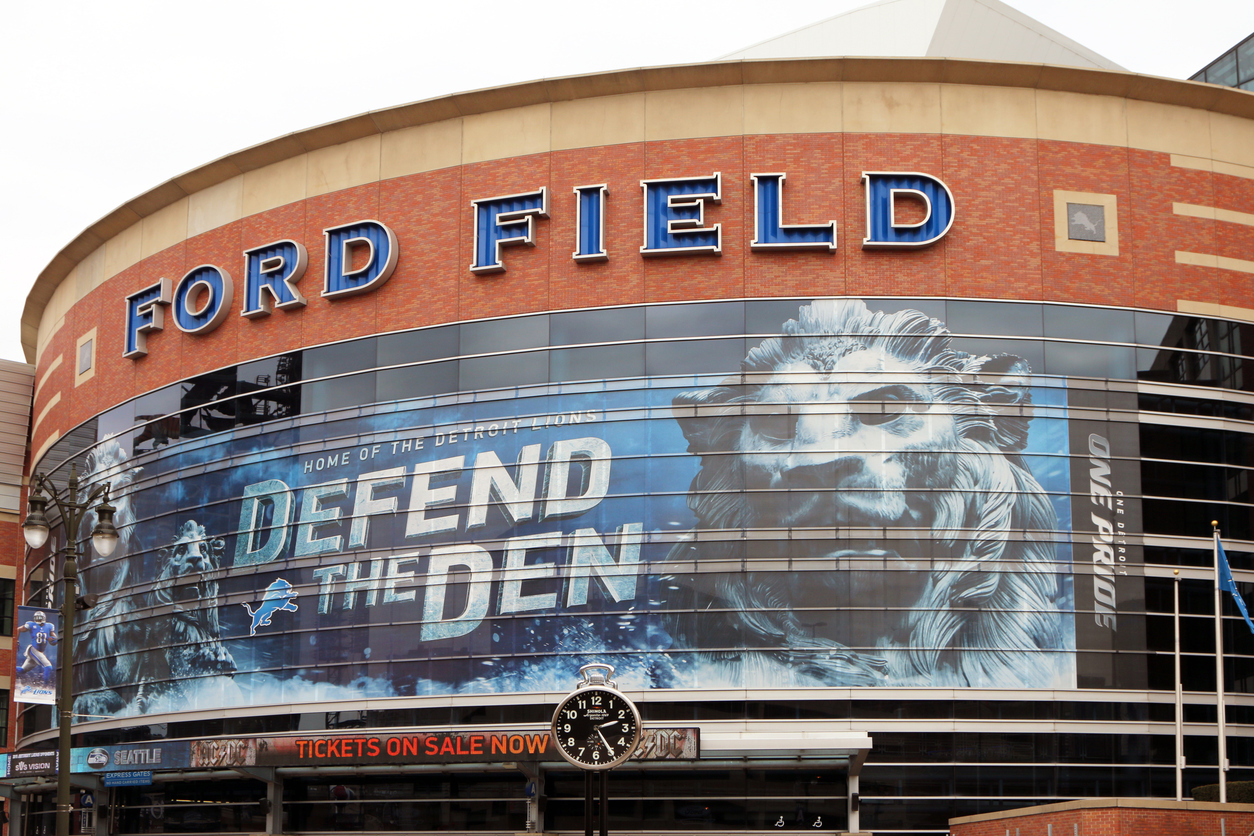
For many years, admitting to being a fan of the Detroit Lions was something people did with their heads hung and a bit of regret in their voice. One of the few NFL teams never to have won a Super Bowl, the Lions suffered years—nay, decades—of losing records. Yet like the scrappy Midwestern town they represent, Detroit fans refused to give up completely, demonstrating their commitment through thick and thin. 

Consider Todd Lansky, who maintained his fandom even while living in the home of the Lions’ division rivals, the Chicago Bears. To proclaim his loyalty, Lansky designed some hats and t-shirts that he and his pals could wear to their local pickup basketball games. They referred to themselves as the Detroit Army—a collection of Detroit expats who found one another in Chicago and offered the moral support needed to remain a fan of a losing team. Encouraged by the popularity of his gear, he started selling hats and shirts on the side, developing a tiny retail operation.

When the Lions hired Dan Campbell in 2021, we can only imagine the excitement of the Detroit Army. Campbell came in with a brash attitude and a determination to win, and his success has been remarkable, leading the team to the playoffs in the past two seasons. The combination of his no-nonsense attitude and ability to inspire realistic hope among Lions fans has transformed him into one of the most popular sports figures in the NFL today. When Campbell makes an announcement or a promise, fans pay attention. 

Todd Lansky is a fan too, which is why he sent some of his Detroit Army gear to Campbell on a lark. But imagine what happened when Campbell, in a nationally televised pregame interview with Michael Strahan on Fox Sports, sported a Detroit Army trucker hat on his head. Lansky likely had no idea what his personal selling initiative would bring about: Within 3 minutes of the broadcast starting, the Detroit Army received 379 requests to place orders. A year later, it racked up nearly 3,000 orders placed and delivered.

But the company still remained mostly a hobby. Although Lansky—an attorney by trade—was smart enough to have trademarked the Detroit Army name and logo early on, he did not initially imagine it as his primary business. As the orders poured in, he quickly worked to develop a more functional website. His teenaged daughter helped set up the company’s Instagram account and coached her dad on how to post compelling content. Even as the marketing tactics they use gain sophistication and traction though, personal selling remains central to the company’s approach. Lansky sends a care package of updated Detroit Army merchandise every couple of weeks to Campbell and other coaches. These public figures frequently and voluntarily wear the gear, praising the brand’s local identity and authenticity, as well as its underlying goal of bringing Lions fans together. Other than the free swag, the Detroit Army does not offer the coaches any compensation; they wear it because they want to. 

Thus, the Detroit Army might have a lot of fans and recruits, informally. But so far, the company remains a one-person operation (at least until Lansky’s daughter graduates from college and, he hopes, joins him in running it). Still, as the company itself claims “Detroiters are fiercely loyal to their hometown. That’s why it works.”

Discussion Questions 

  1. At what point will the Detroit Army need to scale up its operations to meet demand? What sort of marketing plan would you design and recommend to Todd Lansky?
  2. Is sending free merchandise an effective marketing tactic? When and in what sort of conditions is it likely to be more or less successful?

Sources: Scott Cacciola, “As the Detroit Lions Surge, Fans Flock to an Unofficial Uniform,” New York Times, January 17, 2025; Eric Woodyard, “Six Stories that Explain Lions Coach Dan Campbell,” ESPN, December 14, 2022; “Our Story,” Detroit Army, https://detroitarmy.com

All the Rage: Vuori Corners the Athletic Work Apparel Market

Tags

, ,

istockphoto / ismagilov

Steve Jobs had his black turtlenecks. Mark Zuckerberg favors hoodies. These famous figures might not be known for their fashion sense, but their example seemingly is defining what young professionals consider to represent appropriate office attire. Especially as working from home continues to represent an appealing option, more companies—whether they allow work from home or hope to encourage employees to come back to the office—are lowering the strict standards for what is required for people to wear. In response, young, affluent executives have embraced work “uniforms” that provide just as much comfort as their casual and athletic gear. And in this broader environment, Vuori is enjoying remarkable growth.

The brand first came to fame for its tech pants, which were designed with a tapering, semi-formal design but produced with human-made, technical textiles, such as nylon and polyester. They offer breathability and moisture-wicking capacities, and they move and stretch far more than cotton, wool, and other conventional materials used to make pants. Therefore, while they look (at least from some distance) like conventional suit trousers, the pants offer comfort similar to that provided by athletic gear like sweatpants. Its offerings have created a new subcategory of apparel, involving active, casual gear that also looks professional.

Although athleisure has long been a meaningful industry sector, athletic styles of work wear are something different. Rather than just a different type or style of leggings, Vuori innovated a distinctive, unique design. When consumers try out this alternative, they also assign it high marks in terms of the fit it offers, its performance, and, particularly, its comfort level. Therefore, once they try it, they seemingly switch quickly away from other versions, like leggings, that also do not offer the same level of professionalism. For example, in 2018, only 1.2 percent of consumers who shopped at Lululemon also shopped at Vuori; by 2024, that rate had increased to 7.8 percent. 

Noting Vuori’s consumer appeal and growing market share, investors contributed an estimated $825 million to its latest round of funding, prompting a late-2024 valuation of $5.5 billion. Thus, even if Vuori has not totally cornered the market for active wear, it can stake its claim for achieving one of the largest initial public offerings in the retail industry. In the meantime, it is working to spread its vision of office wear to global markets, through investments in expanded and aggressive marketing efforts. Already available in 18 countries, Vuori has indicated its plans to sell its products in more than 100 stores, throughout Europe and Asia, by the end of 2026.

Discussion Questions

  1. Take a look at Vuori’s pants design. Does it represent a truly new design, or is it just another type of athleisure?
  2. Is the active casual wear market a growing one, or does it offer limited share?

Sources: Max Berlinger, “How Vuori Became One of the Hottest Names in Fashion,” The New York Times, January 18, 2025; Daphne Howland, “With Latest Investment, Vuori’s Valuation Hits $5.5B,” Retail Dive, November 11, 2024; Gabrielle Fonrouge, “How Vuori Reached a $5.5 Billion Valuation By Taking Share From Lululemon,” CNBC, December 19, 2024;

U.K. Government Explores the Use of Emissions Zones and Surveillance Technology

Tags

, , ,

London’s government appears determined to lower emissions; it also appears strapped for cash. The global capitol introduced an ultra-low emission zone plan in 2019, which imposed a daily fee on polluting vehicles (gas cars built before 2006, diesel engines built before 2015) that came into central London. By 2023, the fees applied throughout Greater London. The goal was to lower the emissions created in the city and encourage greater uses of more sustainable transportation options. Building on these efforts, London’s mayor Sadiq Khan recently suggested adding surveillance systems and monitors throughout the city, to track cars as they entered the ultra-low emission zones. At the same time, the national government reportedly is considering monetizing satellite surveillance technology that could be used to track the vehicles. Seeking these alternative sources of revenue seems critical; efforts to encourage consumers to switch to electric cars promise to eliminate approximately 25 billion pounds worth of revenue that the country currently earns from fuel taxes. Yet shifting the burden to consumers raises some legitimate questions too. The emission plan arguably affects working-class people disproportionately and detrimentally. As the cost of living in London has risen to untenable levels, they have fled to more remote areas, which offer relatively fewer public transportation options. Other challenges to the policies raise questions about their efficacy; an Imperial College London study suggested that the emission zones actually had little effect on air quality, at least in the months following their implementation. Lawmakers must come together quickly, to weigh policy options that will balance fiscal goals with public interest.

Sources: Phillip Inman, “If You Let Google Have Your Data, Why Not the NHS?” The Guardian, October 19, 2024; “The Ultra-Low Emission Zone for London,” London Assembly

Right on Schedule? How the U.S. Department of Transportation Is Dealing with Flight Delays

Tags

, , , , ,

istockphoto / Torsten Asmus

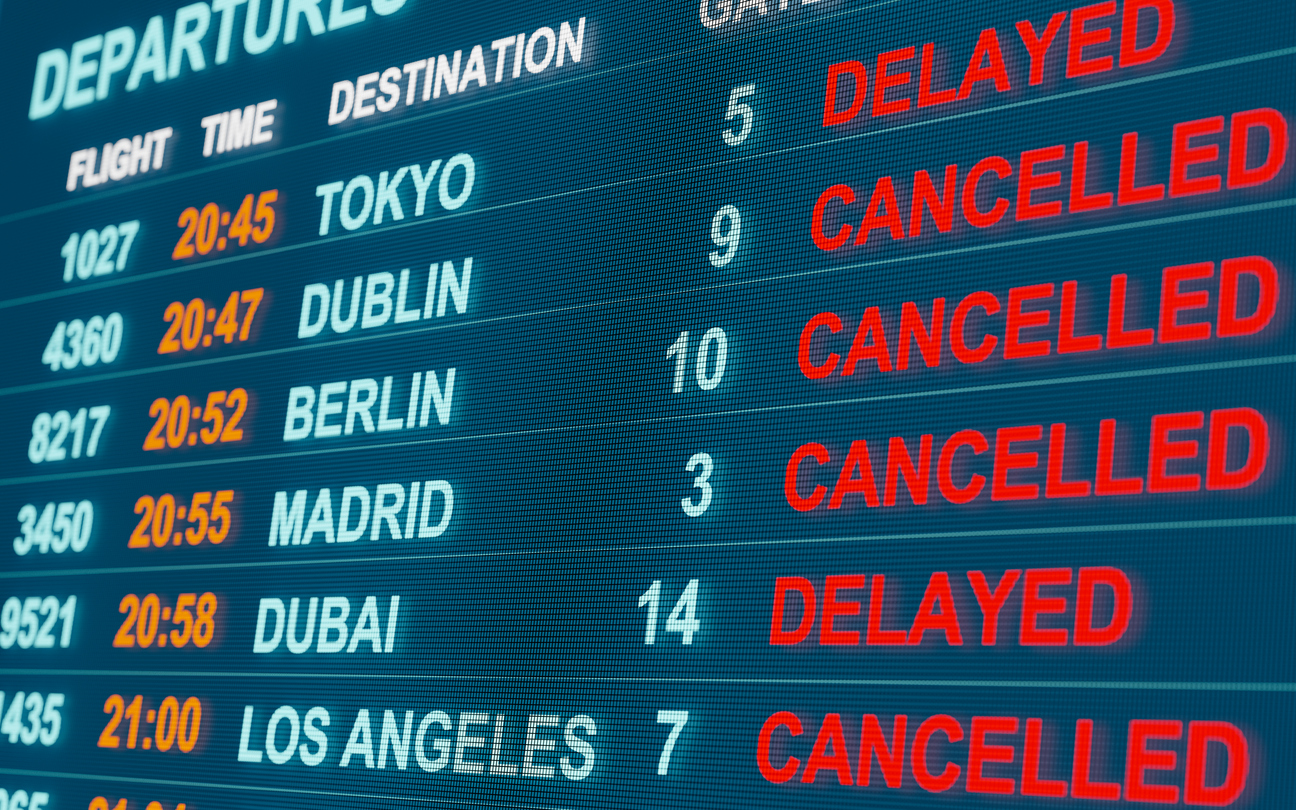
Flight delays are, at some point, unavoidable. There are thousands of elements that must go right for airline travel to happen smoothly and safely, and even if airlines could realistically be expected to avoid every single mechanical issue that might arise in their planes or schedule staff perfectly, they still must deal with the completely uncontrollable influence of weather conditions. Thus, for the most part, airlines can and should be forgiven for reasonable, occasional flight delays and cancellations. 

But reasonable and occasional are very different from preventable and chronic, and the U.S. Department of Transportation (DOT) seems determined to establish this distinction. In recent moves, it has fined JetBlue and Frontier for their persistent records of delays. The fines—$2 million to JetBlue, $650,000 charged to Frontier—go partially to compensate affected passengers. 

Then it brought a $2.1 million suit against Southwest Airlines, alleging that in 2022, two of the airline’s regularly flight paths featured a habitual pattern of late arrivals. Passengers flying between Chicago and Oakland or between Baltimore and Cleveland—two routes that were scheduled at least 10 times per month—would arrive late (by at least a half hour) more than half of the time. According to the U.S. DOT, that signals a chronic pattern. Furthermore, the DOT has estimated that about 90 percent of those delays were preventable. Therefore, it alleges that the airline failed to live up to its legal obligation, which requires it to establish and publish actually realistic flight schedules so that passengers have ready access to reliable information that supports their own planning efforts. 

Beyond the impacts on travelers trying to get to Oakland or Cleveland on time, Southwest’s chronic delays constitutes an anticompetitive practice, according to the DOT. Specifically, it advertised and marketed these flights, as occurring in accordance with the published schedule. Because it could not live up to that promise, Southwest arguably was engaged in deceptive advertising that could give it an unfair competitive advantage. 

Perhaps unsurprisingly, Southwest denies the allegations. It regards the accusations as outdated and, while recognizing that those routes suffered issues in the past, highlights its successful completion of approximately 20 million on-time flights since the legislation that enforces punishments for chronic delays passed in 2009. 

Discussion Questions 

  1. Are fines of airlines that run chronically delayed flight paths appropriate? Are they fair? Take the perspective of the punished airline, its competitors, and travelers to develop your answer.
  2. What are some other ways to incentivize airlines to deal with and avoid chronic delays?

Sources: Niraj Chokshi, “U.S. Sues Southwest Airlines over Chronic Delays,” The New York Times, January 15, 2025; Ayana Archie, “The Transportation Department Sues Southwest Airlines for Alleged Oft-Delayed Flights,” National Public Radio, January 16, 2025; “DOT Sues Southwest Airlines for Chronically Delayed Flights,” Department of Transportation, January 15, 2025